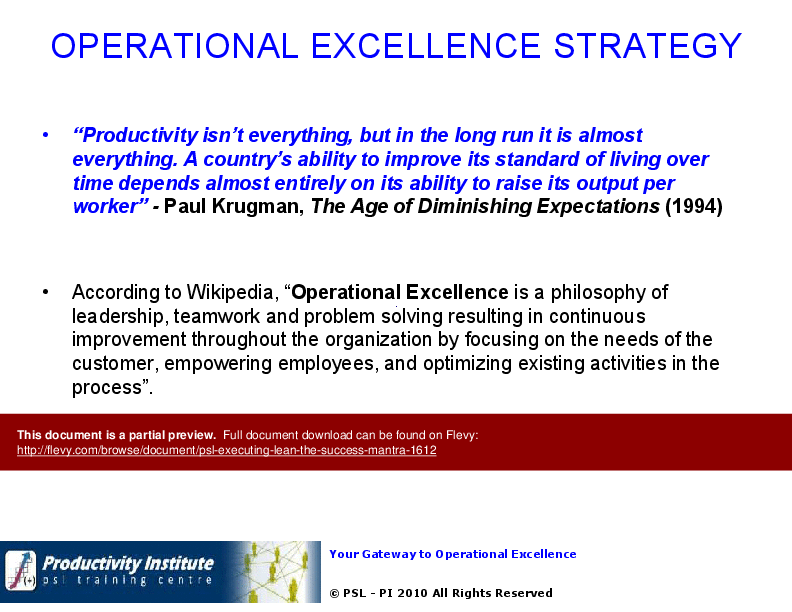

 Click main image to view in full screen.
PSL - Executing Lean - The "Success Mantra" – PowerPoint PPTX Template
PowerPoint (PPTX) 116 Slides


BENEFITS OF THIS DOWNLOADABLE POWERPOINT DOCUMENT
- Understand how to execute Lean the right way
- Understand various Best-Class practices and their differences
- Understand Change Management
LEAN PPT TEMPLATE DESCRIPTION
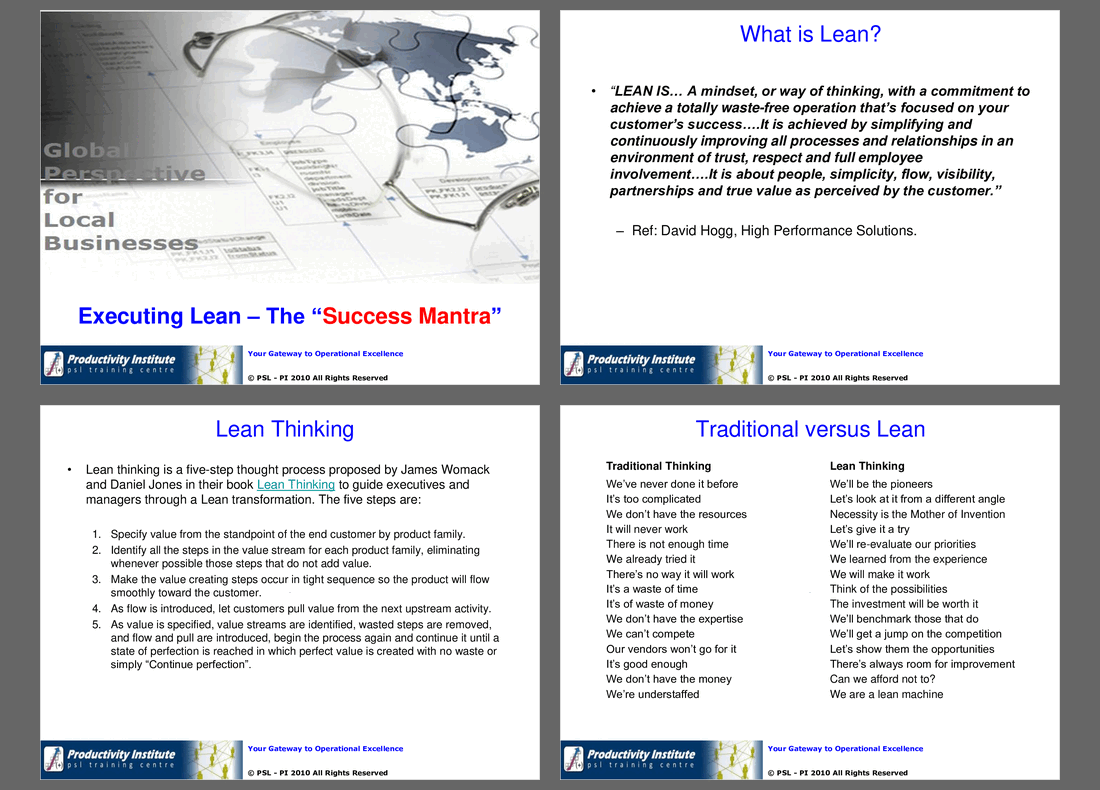
This presentation is aimed at the managers and senior management of any organization and to be used as the 1st presentation to understand how to get the Lean implementation RIGHT!
The presentation consists of 116 slides in all and covers the following topics:
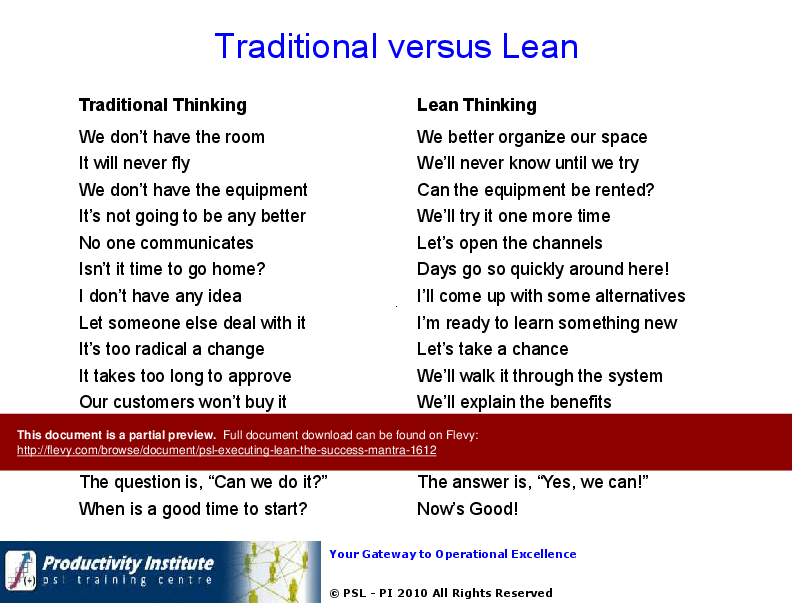
• Understanding Lean
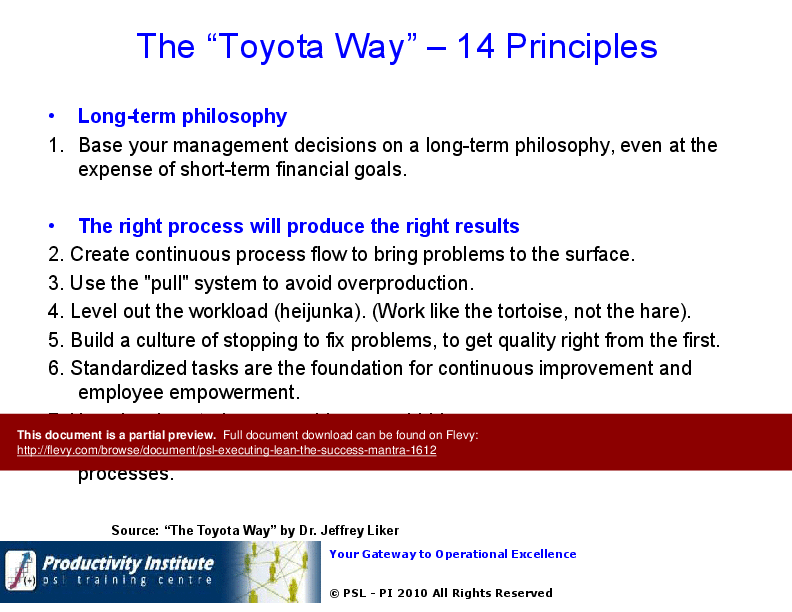
• The Toyota way 14 Principles
• Why do Lean Implementations Fail?
• Managing Change
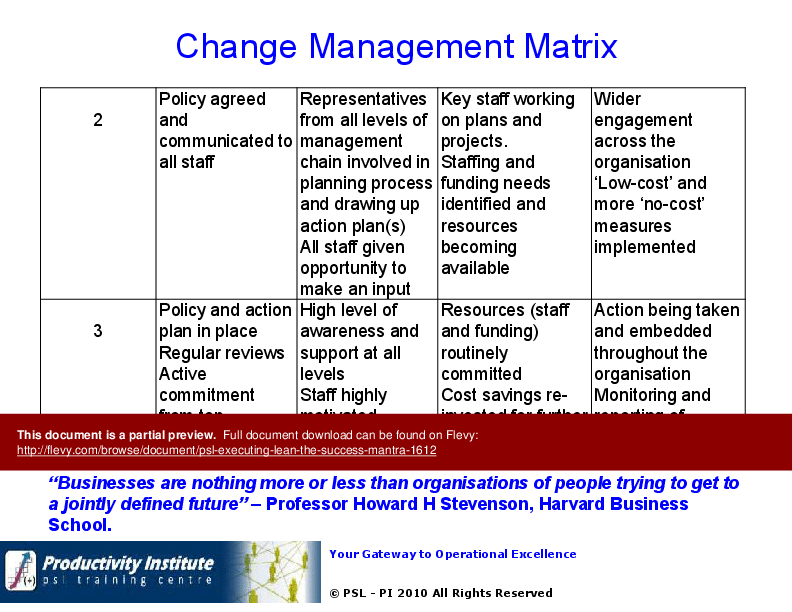
• Reasons for Change Resistance, Leading Change, Change IS Possible, Change Management Matrix
• Operational Excellence Strategy
• Understanding Business Excellence Philosophies – Lean, Six Sigma, TOC, TQM, TWI, and * * * Balanced Scorecard
• Performance Excellence – Baldrige Criteria
• Assessing Your Readiness to Implement Lean
• Useful Lean Assessment Tools, Lean is a Long Term Philosophy, Lean Requires Total Commitment, Lean requires Groundwork, Lean is Goal Driven, Lean requires Adaptation, Lean needs Detailed Documentation and Control, Celebrate Milestones and Share the Profits, The Roll-out Plan
• Steps involved in Executing Lean, Hoshin Kanri, The Kano Model, Value Stream Mapping
• People Development
• Learning The Toyota way, Lean Leadership Development (Diamond Model), Lean is a Team Sport and Discuss Critical Success Factors
Please note that, there are a number of associated documents as per below and you can buy the bundle at a 25% discount.
• Site Review Check-List
• Lean Assessment
• Business Integration Excellence assessment
• Balanced Scorecard Assessment
• Lean Culture Assessment
• Lean Leadership Assessment
• Operational Excellence – The Path to World-Class
• Value Stream Mapping
• Balanced Scorecard Presentation
• Hoshin Kanri – Policy Deployment Presentation
Got a question about the product? Email us at support@flevy.com or ask the author directly by using the "Ask the Author a Question" form. If you cannot view the preview above this document description, go here to view the large preview instead.
PRESENTATION DEEP DIVE ANALYSIS
This deep-dive analysis was generated from the full 116-slide PowerPoint presentation.
Executive Summary
This presentation, titled "Executing Lean – The 'Success Mantra'," serves as a comprehensive guide for organizations aiming to implement Lean principles effectively. Developed by a certified LSS Master Black Belt with extensive global training experience, this resource equips executives and teams with the necessary frameworks to achieve operational excellence. The content covers critical aspects of Lean management, including the Toyota Way, change management strategies, and practical tools like Value Stream Mapping and Hoshin Kanri. By utilizing this presentation, organizations can foster a culture of continuous improvement, enhance customer value, and streamline processes.
Who This Is For and When to Use
• Corporate executives seeking to drive operational efficiency
• Lean practitioners and consultants implementing Lean strategies
• Change management leaders focused on overcoming resistance
• Teams involved in process improvement and performance excellence
Best-fit moments to use this deck:
• During strategic planning sessions to align on Lean initiatives
• When launching a Lean transformation project within the organization
• For training workshops aimed at building Lean capabilities across teams
• To facilitate discussions on change management and employee engagement
Learning Objectives
• Define Lean principles and their application in operational contexts
• Identify and eliminate waste within processes using Lean methodologies
• Build a culture of continuous improvement through employee involvement
• Establish effective change management strategies to overcome resistance
• Utilize tools such as Value Stream Mapping and Hoshin Kanri for Lean implementation
• Assess organizational readiness for Lean transformation and develop actionable plans
Table of Contents
• Understanding Lean (page 3)
• The Toyota Way 14 Principles (page 5)
• Why Do Lean Implementations Fail? (page 10)
• Managing Change (page 12)
• Operational Excellence Strategy (page 15)
• Understanding Business Excellence Philosophies (page 18)
• Assessing Your Readiness to Implement Lean (page 22)
• Steps Involved in Executing Lean (page 25)
• People Development (page 30)
Primary Topics Covered
• Understanding Lean - Lean is defined as a mindset focused on waste elimination and customer value, emphasizing continuous improvement in processes and relationships.
• The Toyota Way - The 14 principles of the Toyota Way guide organizations in achieving operational excellence through long-term thinking and respect for people.
• Change Management - Effective change management strategies are essential for overcoming resistance and fostering a culture of adaptability within organizations.
• Operational Excellence Strategy - This strategy emphasizes leadership, teamwork, and problem-solving to drive continuous improvement and customer satisfaction.
• Value Stream Mapping - A critical tool for visualizing processes, identifying waste, and enhancing flow within value streams.
• Hoshin Kanri - A strategic planning method that aligns goals and actions across the organization to ensure effective execution of Lean initiatives.
Deliverables, Templates, and Tools
• Lean Assessment Tools for evaluating organizational readiness
• Value Stream Mapping templates for visualizing process flows
• Change Management Matrix to guide the implementation of Lean initiatives
• Hoshin Kanri planning templates for aligning strategic objectives
• Training materials for Lean leadership development
• Performance Measurement Systems to track Lean implementation success
Slide Highlights
• Overview of Lean principles and their significance in operational contexts
• The Toyota Way's 14 principles illustrated with practical examples
• Change Management Matrix detailing stages of readiness for change
• Visual representations of Value Stream Mapping and its benefits
• Key metrics for measuring Lean implementation success
Potential Workshop Agenda
Introduction to Lean Principles (60 minutes)
• Overview of Lean and its importance
• Discussion on the Toyota Way and its principles
Change Management Strategies (90 minutes)
• Identifying reasons for change resistance
• Developing effective change management plans
Value Stream Mapping Workshop (120 minutes)
• Hands-on session to create value stream maps
• Identifying waste and opportunities for improvement
Customization Guidance
• Tailor the presentation to reflect specific organizational goals and values
• Adjust case studies and examples to align with industry-specific challenges
• Incorporate internal metrics and performance measures relevant to the organization
• Modify training materials to suit the audience's experience level and needs
Secondary Topics Covered
• Six Sigma and its integration with Lean methodologies
• Theory of Constraints and its role in process improvement
• Total Quality Management principles and practices
• Training Within Industry (TWI) programs for skill development
• Balanced Scorecard as a performance management tool
Topic FAQ
What are the typical phases or sections in a Lean implementation presentation?
A typical Lean implementation presentation covers foundational education, principles (e.g., the Toyota Way), change management, operational excellence strategy, readiness assessment, steps to execute Lean, people development, and measurement. The PSL - Executing Lean - The "Success Mantra" organizes content across these sections within a 116-slide deck.What is Value Stream Mapping and when should teams use it?
Value Stream Mapping is a visual tool to analyze process flow, identify waste, and improve flow. Teams should use it during process improvement workshops to visualize current state and design future state. The PSL deck includes Value Stream Mapping templates and a 120-minute workshop agenda for practical application.How does Hoshin Kanri support Lean deployment in an organization?
Hoshin Kanri aligns strategic objectives with operational actions, ensuring goals are deployed across levels so Lean initiatives are executed consistently. Use Hoshin Kanri during strategic planning and deployment phases; the PSL presentation provides Hoshin Kanri planning templates and coverage of policy deployment.What change management components are important for Lean transformations?
Important components include diagnosing reasons for resistance, staging readiness, leading change, and using a Change Management Matrix to guide interventions. Effective change management fosters employee engagement and sustained adoption; PSL - Executing Lean - The "Success Mantra" includes a Change Management Matrix and related guidance.What should I look for when choosing a Lean toolkit or presentation for my team?
Look for content that covers Lean principles (including the Toyota Way), tools like Value Stream Mapping and Hoshin Kanri, change-management guidance, readiness assessment tools, and training materials. The PSL deck explicitly includes those elements along with Lean Assessment Tools and performance measurement systems.How can I assess whether my organization is ready to implement Lean?
Conduct a readiness evaluation using Lean Assessment Tools to identify strengths, gaps, required groundwork, leadership commitment, documentation needs, and rollout planning. The PSL presentation includes Lean Assessment Tools and guidance on assessing readiness for implementation.I need to reduce resistance during a Lean rollout—what practical steps can help?
Practical steps include diagnosing reasons for resistance, developing targeted change plans, engaging employees in continuous improvement, and celebrating milestones. Use structured guidance such as a Change Management Matrix and people-development materials; PSL provides those tools and workshop content to support these steps.How do I determine the cost-effectiveness of buying Lean templates and slide decks?
Evaluate whether the materials include practical tools you will reuse (e.g., VSM templates, Hoshin Kanri templates, assessment tools), how they shorten training time, and any bundled discounts. The author offers associated documents as a bundle of ten items at a 25% discount, which can be a cost consideration.Which frameworks should process improvement teams be familiar with when executing Lean?
Process improvement teams should be familiar with Lean fundamentals (waste reduction), the Toyota Way's 14 principles, Value Stream Mapping, Hoshin Kanri, and complementary approaches like Six Sigma, TOC, TQM, and TWI. Materials that cover these frameworks assist teams in execution and measurement.What workshop formats and timing are effective for Lean training sessions?
Effective workshop formats combine an introductory session (about 60 minutes), focused change-management training (about 90 minutes), and hands-on Value Stream Mapping workshops (about 120 minutes). The PSL presentation includes a potential workshop agenda with these specific session durations.Document FAQ
These are questions addressed within this presentation.
What is Lean?
Lean is a philosophy focused on maximizing customer value while minimizing waste, achieved through continuous improvement of processes.
How does the Toyota Way influence Lean implementation?
The Toyota Way provides foundational principles that guide organizations in achieving operational excellence through a focus on long-term thinking and respect for people.
What are common reasons for Lean implementation failures?
Common reasons include lack of leadership commitment, unclear vision, treating Lean as a set of tools rather than a philosophy, and insufficient employee engagement.
What tools are essential for executing Lean?
Key tools include Value Stream Mapping, Hoshin Kanri, and performance measurement systems to track progress and outcomes.
How can organizations assess their readiness for Lean?
Organizations can use Lean Assessment Tools and conduct readiness evaluations to identify strengths and areas for improvement before implementation.
What role does change management play in Lean?
Change management is critical for addressing resistance, ensuring employee buy-in, and fostering a culture of continuous improvement throughout the Lean transformation process.
How can success be measured in Lean initiatives?
Success can be measured through key performance indicators such as waste reduction, improved cycle times, and enhanced customer satisfaction.
What is the significance of employee involvement in Lean?
Employee involvement is crucial as it fosters a sense of ownership, encourages problem-solving, and drives continuous improvement from the ground up.
Glossary
• Lean - A methodology focused on waste reduction and value creation.
• Toyota Way - A set of principles guiding Lean practices, emphasizing long-term thinking and respect for people.
• Value Stream Mapping - A visual tool for analyzing and improving process flows.
• Hoshin Kanri - A strategic planning process aligning organizational goals with actions.
• Change Management - The process of managing organizational change effectively.
• Operational Excellence - A philosophy of leadership and teamwork aimed at continuous improvement.
• Six Sigma - A data-driven approach to eliminating defects in processes.
• Total Quality Management (TQM) - A management approach focused on long-term success through customer satisfaction.
• Theory of Constraints (TOC) - A management philosophy aimed at improving organizational performance by identifying and managing constraints.
• Balanced Scorecard - A performance management tool that translates an organization's strategic objectives into a set of performance measures.
• Kaizen - A Japanese term meaning "continuous improvement."
• Muda - A Japanese term for waste or non-value-added activities.
• Gemba - A Japanese term meaning "the real place," referring to where work is done.
• Kano Model - A framework for understanding customer satisfaction based on needs and expectations.
• 5S - A workplace organization method that uses 5 Japanese words: Seiri, Seiton, Seiso, Seiketsu, and Shitsuke.
• Jidoka - A principle of the Toyota Production System emphasizing quality at the source.
• Just-In-Time (JIT) - A production strategy that strives to improve a business's return on investment by reducing in-process inventory and associated carrying costs.
• Total Productive Maintenance (TPM) - A maintenance approach aimed at increasing productivity by reducing downtime.
• Standard Work - A documented process that defines the most efficient method to perform a task.
• Continuous Improvement - Ongoing efforts to improve products, services, or processes.
Source: Best Practices in Lean PowerPoint Slides: PSL - Executing Lean - The "Success Mantra" PowerPoint (PPTX) Presentation Slide Deck, OpEx Academy NZ
ABOUT THE AUTHOR
Vishnu Rayapeddi is an experienced management consultant and trainer specializing in implementing continuous process improvements. Vishnu is a pioneer in Lean Management which combines the power of Lean Thinking, TOC, Six Sigma, TQM, TWI, Balanced Scorecard, cGMP and other best-class methodologies such as, DMAIC, Value Stream Mapping, Root Cause Analysis, 5S, Quick Changeovers, Quality and ... [read more]
Ask the Author a Question
You must be logged in to contact the author.